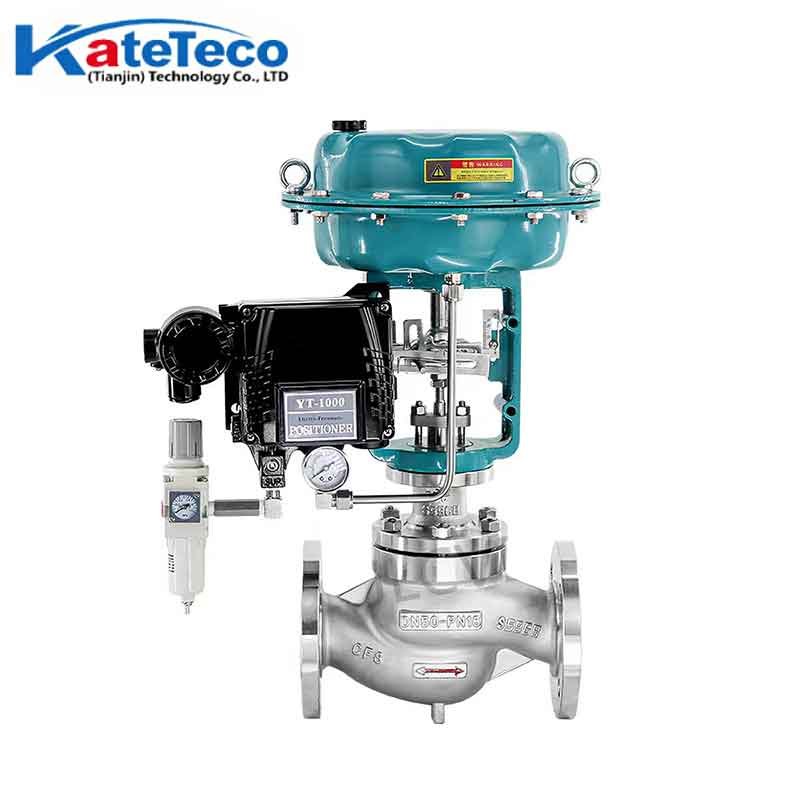
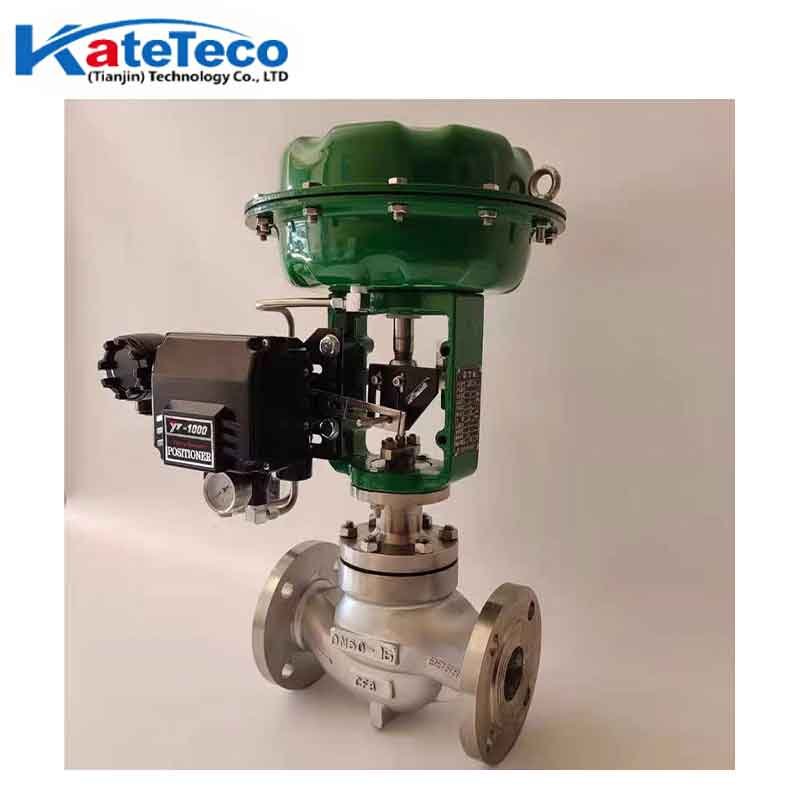
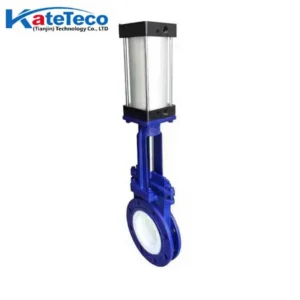
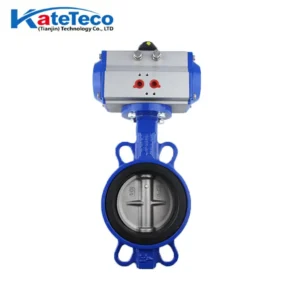
Multi – spring pneumatic diaphragm control valve is a common type of pneumatic control valve, consisting of a multi – spring pneumatic diaphragm actuator and a control valve body. The following is a detailed introduction:
Structural Composition
The actuator is composed of a diaphragm, compression springs, a tray, a push rod, a support, etc. The valve body usually has a straight – through single – seat or sleeve structure. The valve core is of upper – guided plunger type, etc. The valve seat cooperates with the valve core to achieve throttling, and the valve body is connected to the pipeline through flanges.
Working Principle
An external pneumatic signal pressure is input into the diaphragm chamber. The pressure acts on the diaphragm to generate a thrust, compressing the spring set. This causes the push rod to move, driving the valve stem and the valve core. The movement continues until the thrust balances the spring counter – force, and the valve core stabilizes at the corresponding stroke, thus realizing the regulation of the fluid. There are two action modes: direct – acting and reverse – acting.
Product Features
It features a compact structure, light weight, sensitive operation, low pressure drop loss, large valve capacity, and accurate flow characteristics. It can be equipped with an electro – pneumatic valve positioner or a pneumatic valve positioner to achieve automatic adjustment and control of the fluid medium in the process pipeline.
Application Scenarios
It is widely used in industries such as chemical engineering and petroleum. It can accurately control parameters such as the pressure and flow rate of gas, liquid and other media. It is especially suitable for occasions where the allowable leakage is small, the pressure difference before and after the valve is not large, and there is a certain viscosity and a small amount of fibrous media.