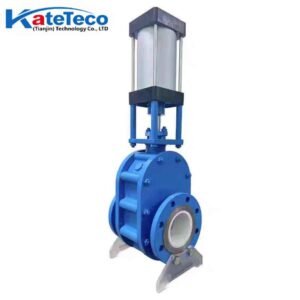
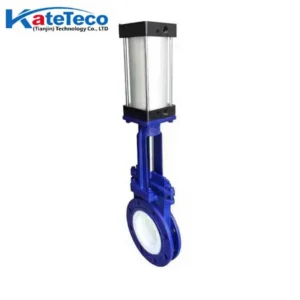
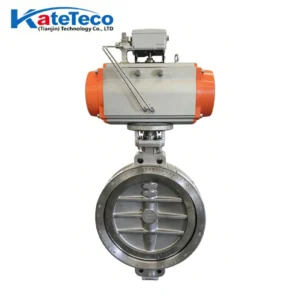
AT – Type pneumatic actuator

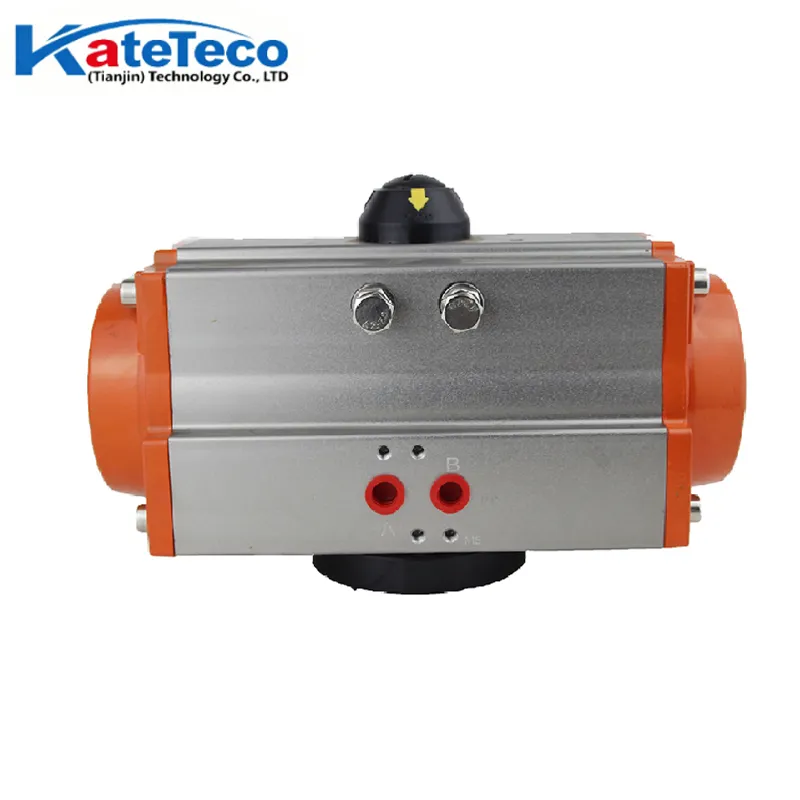
The AT – type pneumatic actuator, powered by compressed air, features a compact double – piston gear – rack structure. It has two working types: double – acting and single – acting. Installation requires ensuring coaxiality and clean air. Its standard stroke is 0° – 90°, with a common air pressure of 2.5 – 8 bar, and operating temps vary by seal material.


    Purchase details
AT – type pneumatic actuator is a common type of pneumatic actuator. It usually uses compressed air as power and outputs angular stroke torque through the mechanical transmission of piston racks and gears. The following is a detailed introduction:

Structural Features

  • The cylinder body is made of extruded aluminum alloy and treated with hard anodization, which has strong wear – resistance. The double – piston gear – rack structure is compact, with precise meshing, ensuring a constant output torque. F4 guide rings are installed at the moving parts of the piston, rack, and output shaft to reduce friction. The cylinder body, end cover, etc. are all treated with anti – corrosion measures, and the fasteners are made of stainless steel.

Working Principle

  • It is divided into double – acting type and single – acting type (spring – return). In the double – acting type, when the air source pressure enters the middle cavity between the two pistons of the cylinder, the pistons separate, driving the output shaft to rotate counter – clockwise; when the air source pressure enters the air cavities at both ends of the cylinder, the pistons move towards the middle, and the output shaft rotates clockwise. In the single – acting type, under the action of the air source pressure, the pistons separate, causing the output shaft to rotate counter – clockwise. When the air source pressure is reversed, the elastic force of the spring makes the pistons move towards the middle, and the output shaft rotates clockwise.

Installation and Usage Precautions

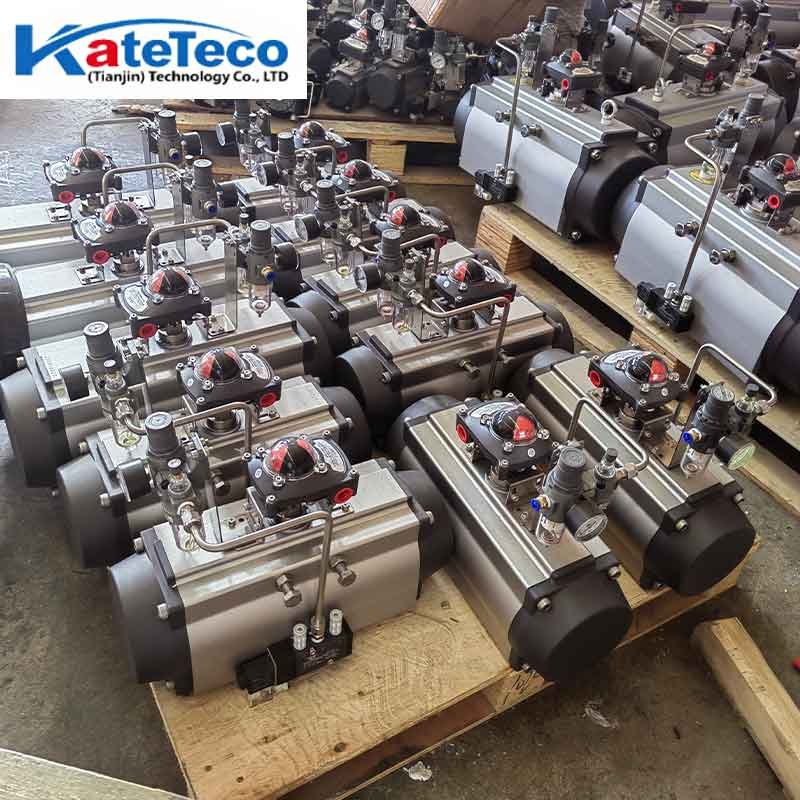
  • It can be directly connected to the valve or through a support. It is necessary to ensure the coaxiality of the output shaft and the valve stem. The connecting pipes, etc. should be clean, and the exhaust port of the solenoid valve should face downward. The compressed air should be filtered and dried. Before commissioning, confirm that the air pressure, etc. meet the requirements. During normal operation, it should be checked once a month and overhauled once a year.

Performance Parameters

  • The standard stroke angle is 0° – 90°, which can be adjusted by ±5°. There are also stroke angles such as 0° – 120° and 0° – 180° available. The air source pressure is usually 2.5bar – 8bar, with a maximum of 10bar. The operating temperature varies depending on the sealing material. For example, for nitrile rubber seals, it is – 20°C – +80°C; for fluororubber seals, it is – 15°C – +150°C; for silicone rubber seals, it is – 40°C – +80°C.